Building energy performance, city by city
Understand how building design choices shape energy use and emissions
BuildEnergy.ca helps residents, builders, designers, municipalities, and decision-makers explore how different components and design choices influence energy performance, operating emissions, and long-term sustainability.
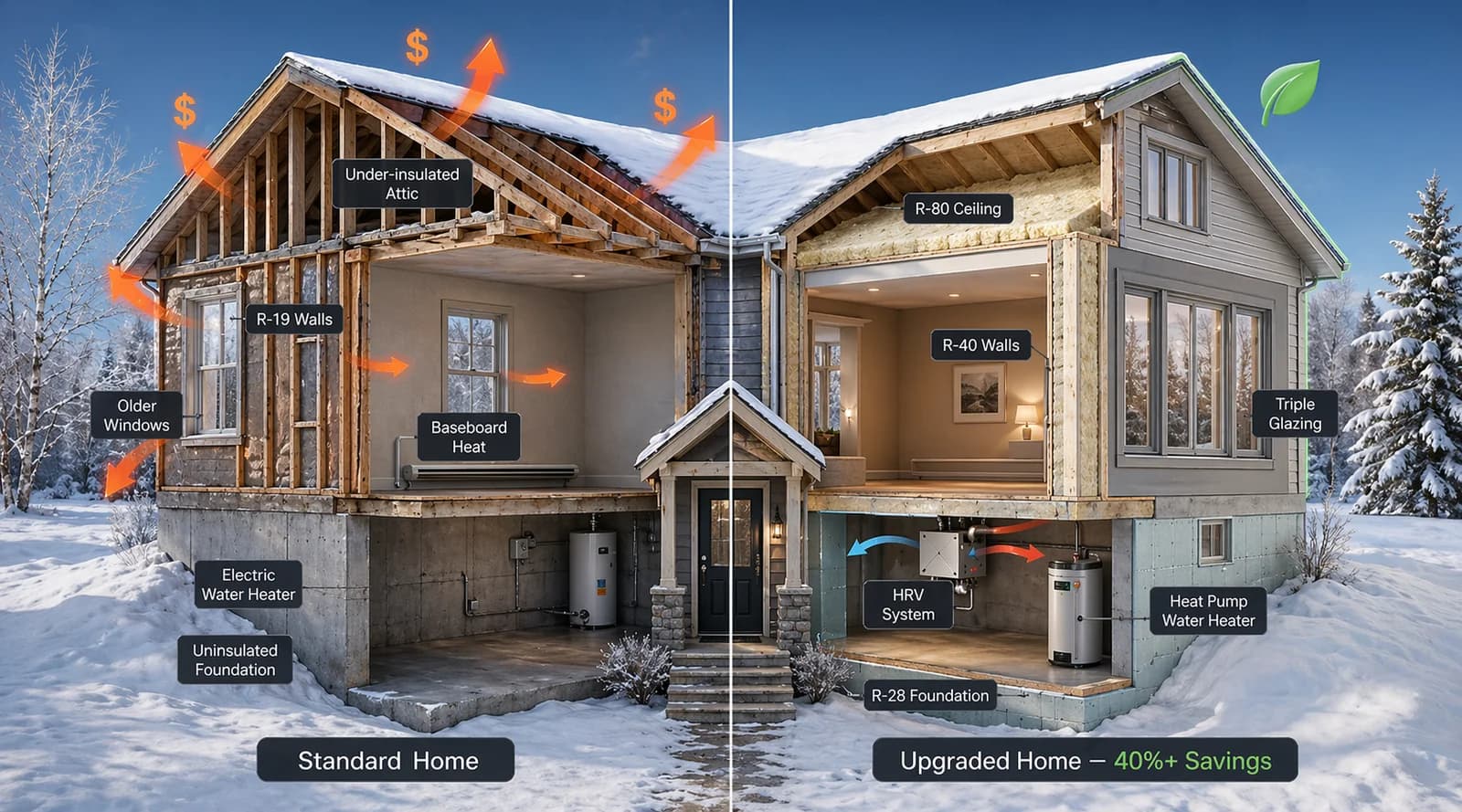
What it is
A public information platform for building energy performance.
Buildings do not all perform the same way. A home or building's energy performance can be influenced by many choices, including insulation levels, windows, air leakage, heating and cooling systems, ventilation, building size, fuel type, and renewable energy options. Energy performance is commonly understood as the way a building uses energy based on its envelope, systems, and energy sources.
This website presents these concepts in a practical, city-specific way so that the public can better understand how design and construction decisions connect to energy efficiency, emissions, comfort, and climate goals.
It is not a replacement for a professional energy model, energy audit, permit review, or engineering assessment.
Who it's for
Built for everyone who shapes how buildings perform
Each role gets the same simulation data, through a lens tuned to the decisions they actually make.
Residents and homeowners
Residents and homeowners can use it to better understand how building upgrades may affect energy use and emissions.
Builders and contractors
Builders and contractors can use it as a communication tool when discussing high-performance construction and retrofit options.
Architects, engineers, and energy consultants
Architects, engineers, and energy consultants can use it to help explain how design decisions influence performance.
Municipalities
Municipalities can use it to support public education, climate action planning, and community engagement.
Educators and students
Educators and students can use it as a learning resource for building science, energy efficiency, and decarbonization.
Why this matters
Buildings are a key part of local climate action.
How buildings are designed, constructed, renovated, heated, and operated has a direct impact on energy use and greenhouse gas emissions. BuildEnergy.ca makes the consequences of those choices visible — and comparable.
- Reduce energy consumption
- Lower operating costs
- Improve indoor comfort
- Support climate and emissions goals
- Inform better design and policy decisions
- Increase public awareness of high-performance options
Natural Resources Canada describes building performance standards as policies that set energy and/or greenhouse gas performance levels and support ongoing improvements through benchmarking and upgrades.
How it works
From a design choice to dollars and emissions, in a few clicks
BuildEnergy.ca turns thousands of simulated retrofit scenarios into clear, city-specific guidance for the people who own, design, and operate buildings.
- 01
Start in your city
Every instance is grounded in a real Canadian municipality — its climate, its building archetypes, and the rules that apply there.
- 02
Compare scenarios
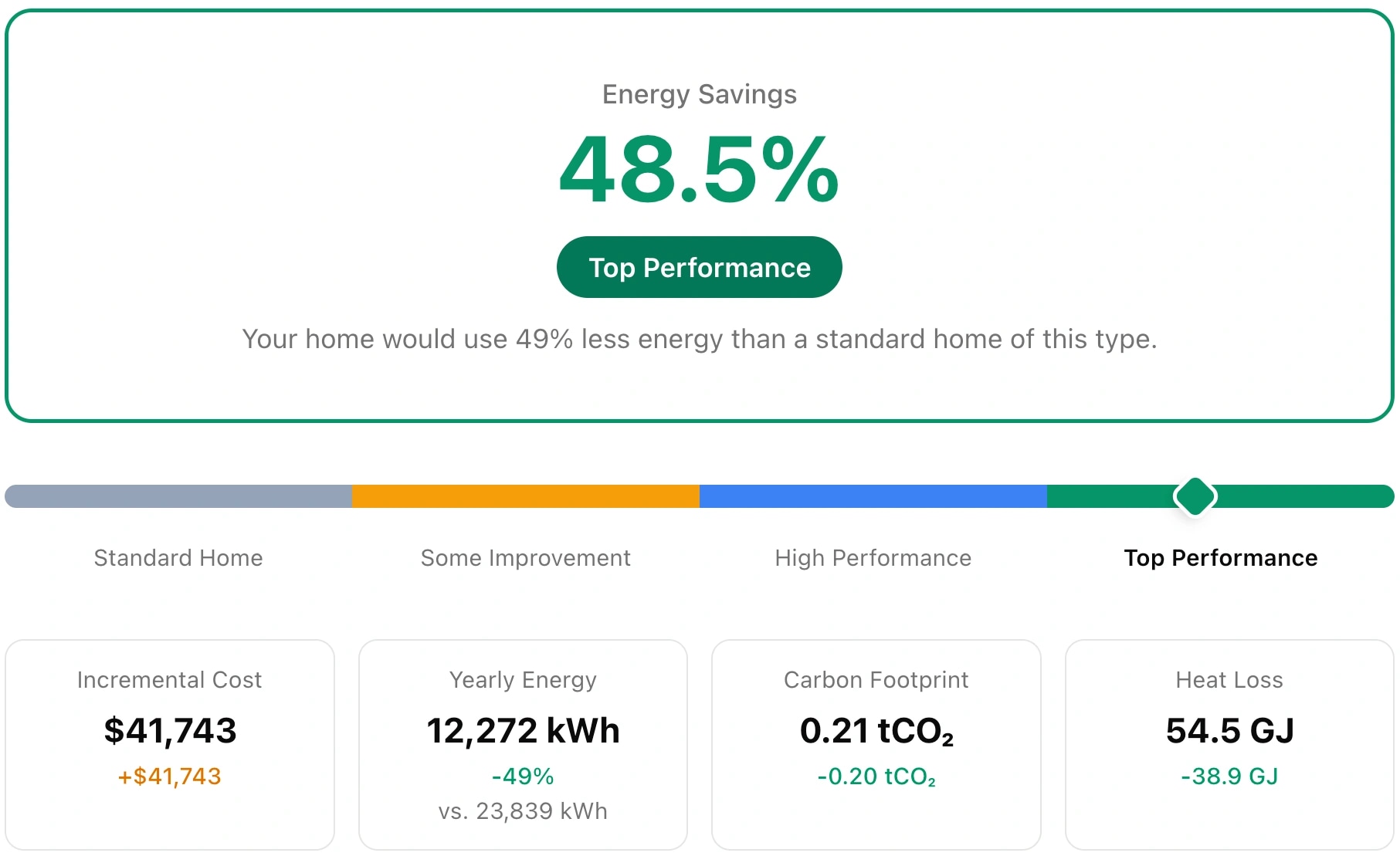
Trade off envelope upgrades, mechanical systems, and renewables. Watch how each choice moves cost and emissions side by side.
- 03
Take it forward
Leave with the numbers you need to talk to a builder, a utility, or a council with confidence.
For municipalities
Bring BuildEnergy.ca to your city
We build city-specific instances of the platform for Canadian municipalities. St. John's is live today — yours could be next.